


What Is Plate Load Testing, and Why Does It Matter for Your Project?
Introduction
Before a crane goes up, a slab gets poured or a footing gets formed, there’s one question that matters more than most: can the ground actually carry the load? Too often, the answer comes from conservative design assumptions rather than real data from the site. That’s where plate load testing comes in, and we’ve written this post to explain what it is, how it works and why it can make a real difference on your project.
What Is Plate Load Testing?
Plate load testing is an in-place field test that measures how a soil, engineered fill or working platform responds under load. Instead of estimating ground performance from lab results or typical values, the test measures it directly, at the location where you plan to build.
The results help engineers understand how much load the ground can support and how much it will settle under that load, two key factors in designing safe, efficient foundations and working surfaces.
How Does the Test Work?
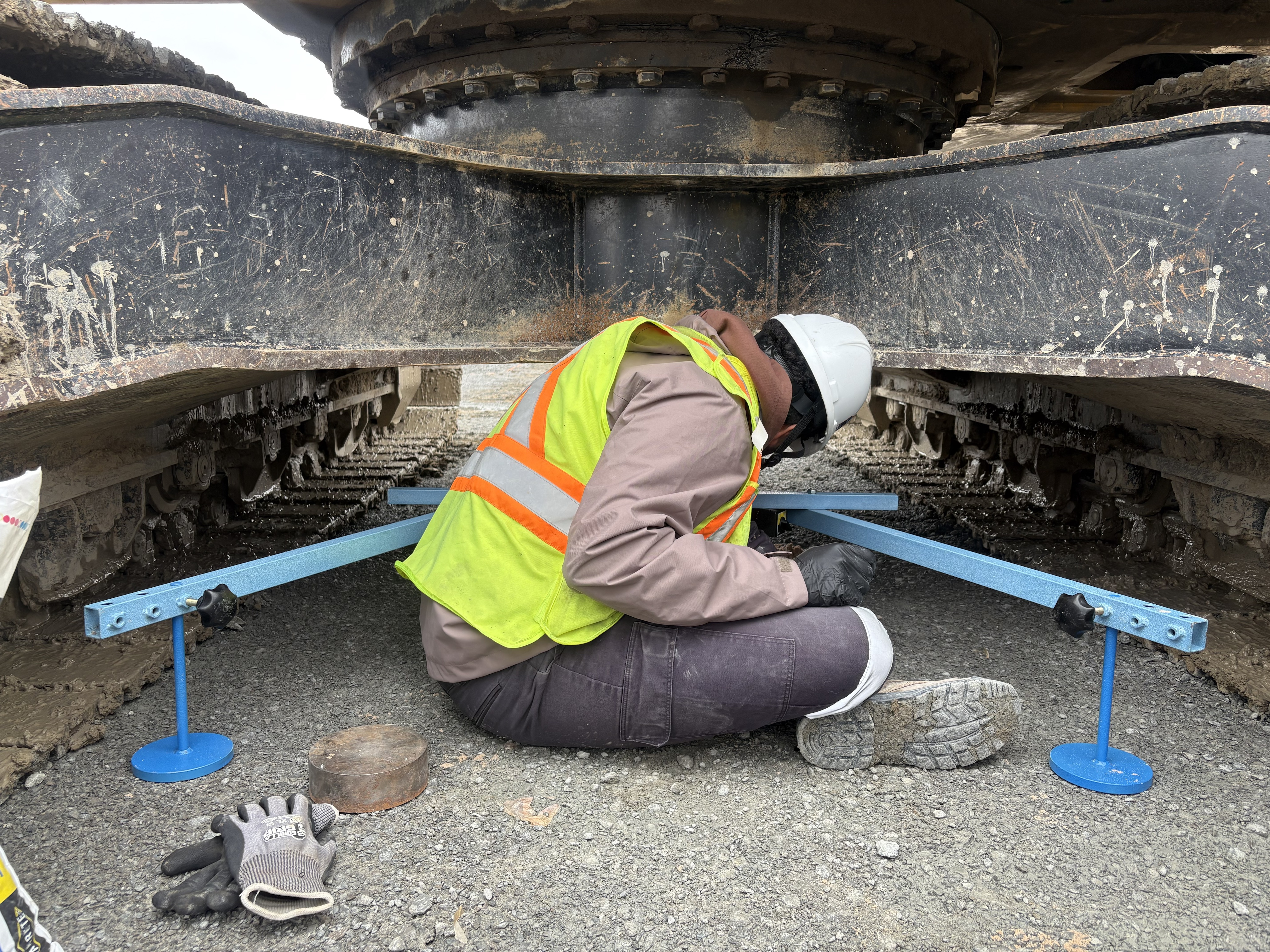
A rigid steel plate is placed on the prepared surface being tested. A hydraulic jack applies load to the plate, pushing against a heavy reaction source, often an excavator or other piece of heavy equipment. As the load increases in stages, gauges record how much the plate settles.
By plotting load against settlement, engineers can see how the ground behaves and use those measured values in design.
Why Does It Matter?
When ground conditions aren’t measured directly, designs have to allow for uncertainty, which usually means being conservative. Measured values from a plate load test can replace those assumptions, which may allow for:
- Higher allowable bearing pressures, where the ground can support them
- Leaner granular sections
- Smaller footings
- Less over-excavation and rework
In other words, testing can help avoid both overbuilding and underbuilding, saving time and money while keeping the project safe.
Where Is Plate Load Testing Used?
Plate load testing is commonly used for:
- Crane pads: confirming the ground can safely support crane loads
- Slab-on-grade construction: verifying subgrade performance before pouring
- Foundation subgrades: confirming bearing conditions at footing level
- Working platforms and engineered fill: checking that placed fill performs as designed
Conclusion
Plate load testing gives you real answers about the ground beneath your project, right where you’re building. Replacing assumptions with measured data can lead to more efficient designs, fewer surprises and a more confident start to construction.
AllRock mobilizes quickly and turns results around fast, so your foundations and earthworks keep moving. Planning a crane pad, slab-on-grade or foundation subgrade? Reach out to our team for a quote.